
Practice

Car theory test practice questions

20 real DVSA revision questions from road and traffic signs and hazard awareness, with the correct answer and a full explanation for every one. Answer them one at a time and track your score against the real pass mark — 43 out of 50 — or just read the lot.

  • 20 questions
  • 10 road and traffic signs
  • 10 hazard awareness
  • Pass mark 43 / 50

Reproduced from the Driver and Vehicle Standards Agency (DVSA) revision question bank under licence. The DVSA has given permission for the reproduction of Crown copyright material; DVSA does not accept responsibility for the accuracy of the reproduction. Source: DVSA - Theory Test Revision Question Bank.

20 here. The app carries the full DVSA revision question bank for the car theory test, plus hazard perception clips and the 2026 Highway Code. Free to get started, works offline, no signup.

  1. Question 1 of 20

    Road and traffic signs

    What should you do when you see this sign as you travel along a motorway?
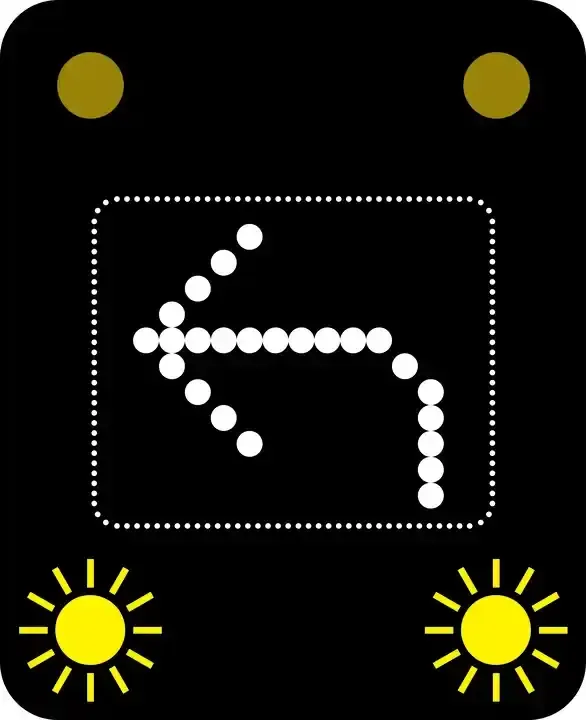
    Illustration for the question: What should you do when you see this sign as you travel along a motorway?

    Correct answer: A — Leave the motorway at the next exit

    You'll see this sign if the motorway is closed ahead. Pull into the left-hand lane as soon as it's safe to do so. Do not wait until the last moment before you move across, because the lane may be busy and you'll have to rely on another driver making room for you.
  2. Question 2 of 20

    Hazard awareness

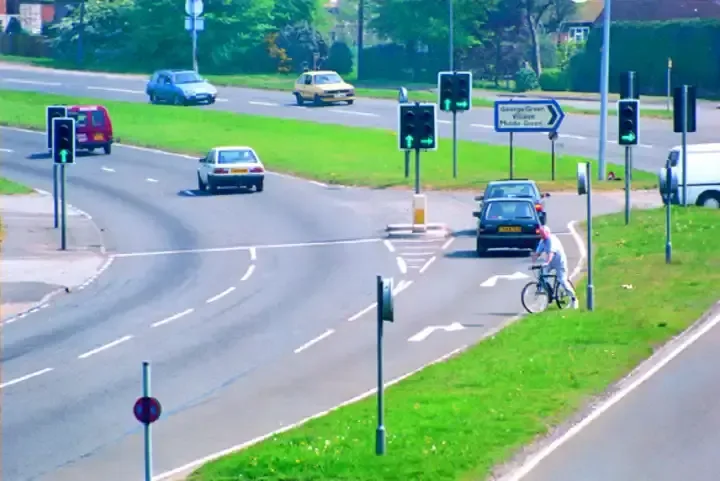
    What's the main hazard shown in this picture?

    Illustration for the question: What's the main hazard shown in this picture?

    Correct answer: C — The cyclist crossing the road

    Look at the picture carefully and try to imagine you're there. The cyclist in this picture appears to be trying to cross the road. You must be able to deal with the unexpected, especially when you're approaching a hazardous junction. Look well ahead to give yourself time to deal with any hazards.

  3. Question 3 of 20

    Road and traffic signs

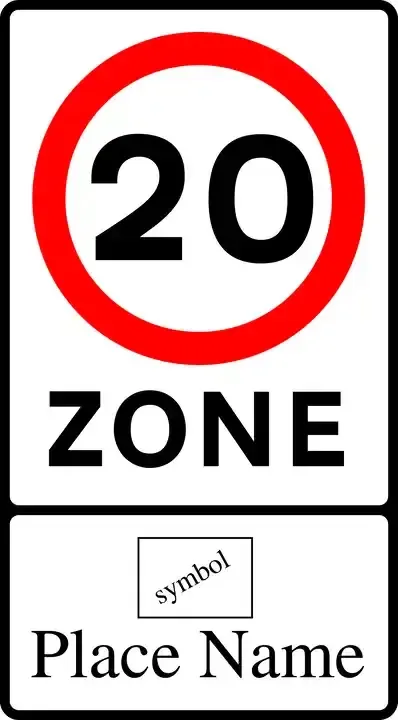
    What does this sign mean?

    Illustration for the question: What does this sign mean?

    Correct answer: A — Maximum speed limit with traffic calming

    If you’re in a place where there are likely to be pedestrians (for example, outside a school, near a park, in a residential area or in a shopping area), you should be cautious and keep your speed down.

    Many local authorities have taken steps to slow traffic down by creating traffic-calming measures such as road humps. They're there for a reason; slow down.

  4. Question 4 of 20

    Hazard awareness

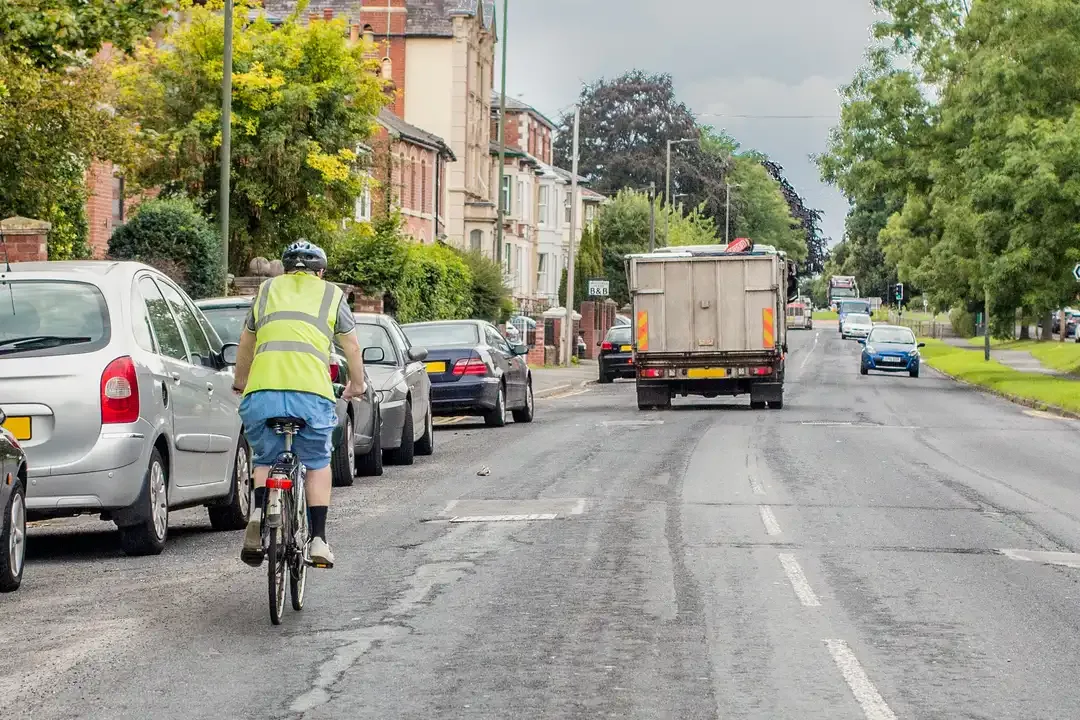
    What's the main hazard you should be aware of when following this cyclist?

    Illustration for the question: What's the main hazard you should be aware of when following this cyclist?

    Correct answer: B — The cyclist may swerve into the road

    When following a cyclist, be aware that they have to deal with the hazards around them. They may wobble or swerve to avoid a pothole in the road or see a potential hazard and change direction suddenly. Do not follow them too closely or rev your engine impatiently.

  5. Question 5 of 20

    Road and traffic signs

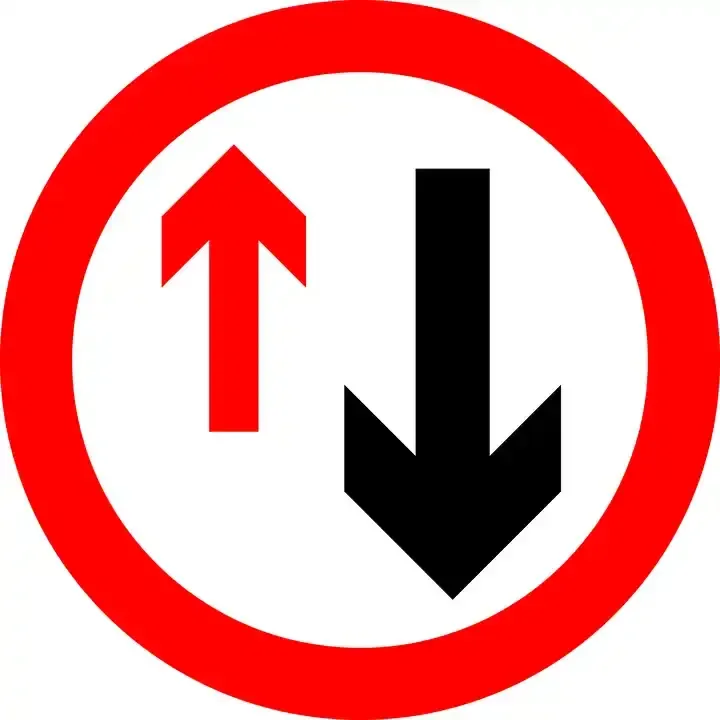
    What does this traffic sign mean?

    Illustration for the question: What does this traffic sign mean?

    Correct answer: B — Give priority to oncoming traffic

    Priority signs are normally shown where the road is narrow and there’s not enough room for two vehicles to pass. Examples are narrow bridges, roadworks and where there's a width restriction.

    Make sure you know who has priority; do not force your way through. Show courtesy and consideration to other road users.

  6. Question 6 of 20

    Hazard awareness

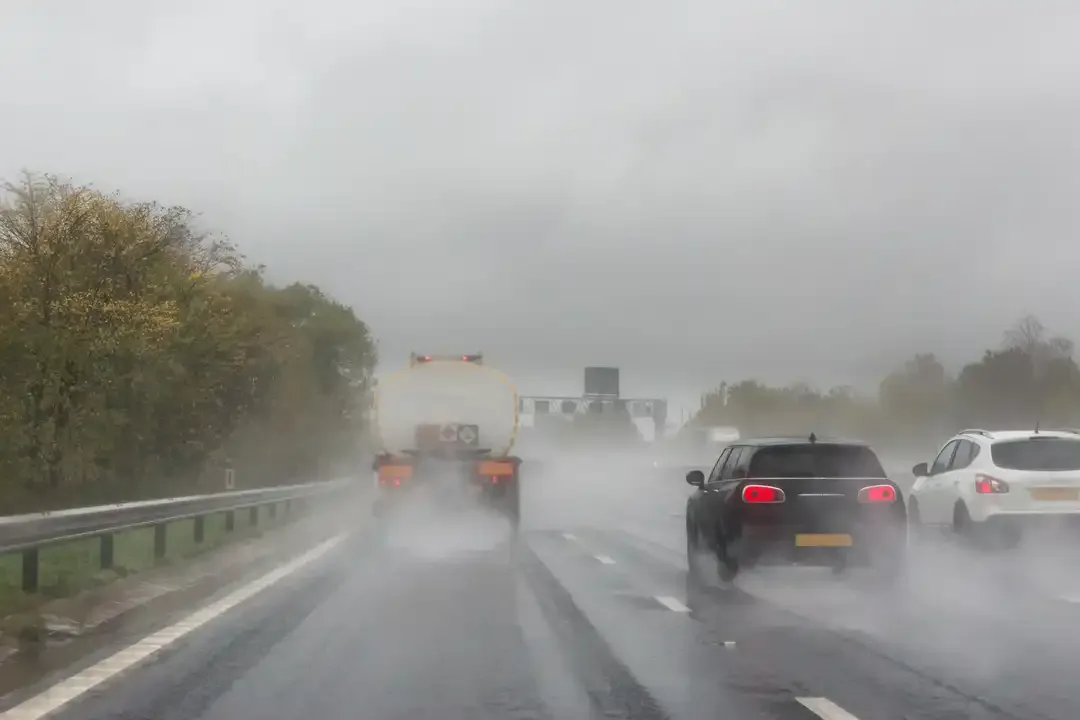
    What should you do if it's raining and you're following this lorry on a motorway?

    Illustration for the question: What should you do if it's raining and you're following this lorry on a motorway?

    Correct answer: D — Be aware of spray reducing your vision

    The usual two-second time gap increases to four seconds when the roads are wet. If you stay well back, you’ll

    • be able to see past the vehicle

    • be out of the spray thrown up by the lorry’s tyres

    • give yourself more time to stop if the need arises

    • increase your chances of being seen by the lorry driver.

  7. Question 7 of 20

    Road and traffic signs

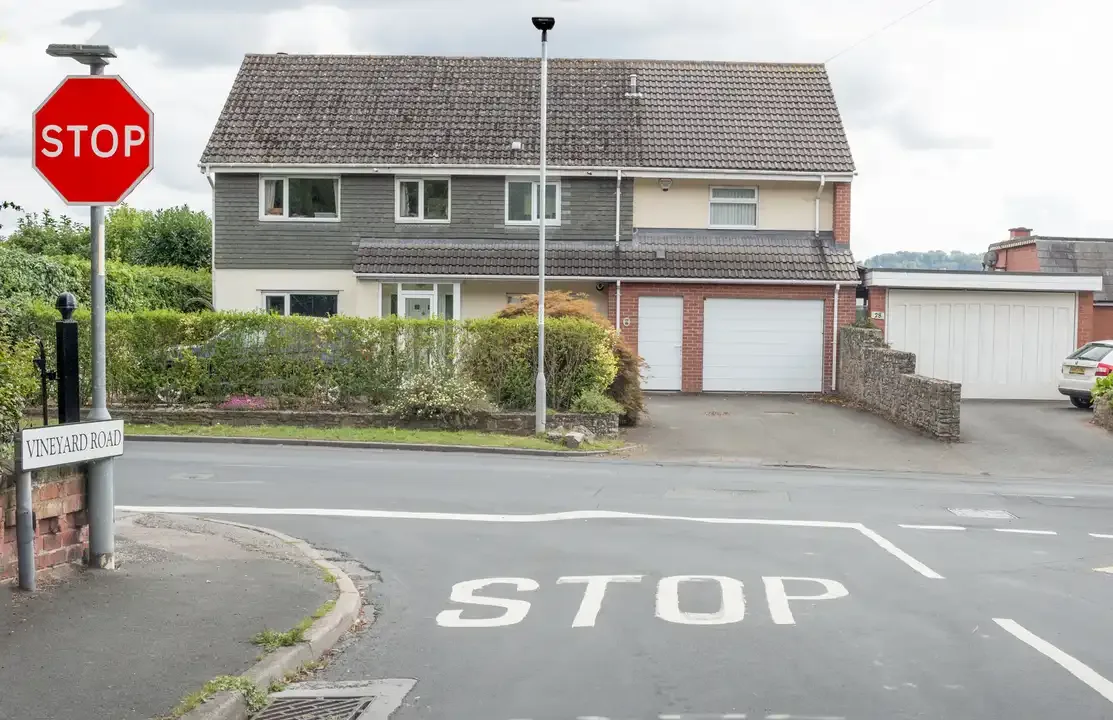
    Why does this junction have a 'stop' sign and a stop line on the road?

    Illustration for the question: Why does this junction have a 'stop' sign and a stop line on the road?

    Correct answer: C — Visibility along the major road is restricted

    Where emerging traffic has a very restricted view of the main road, you may find a 'stop' sign and a solid white stop line. You must stop at the line and then check carefully before you emerge.

  8. Question 8 of 20

    Hazard awareness

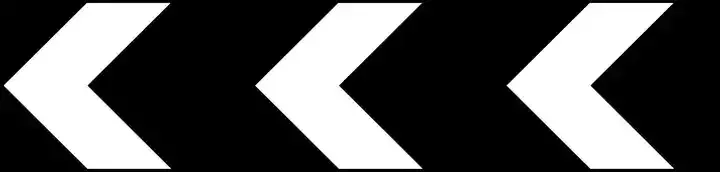
    What should you expect if you see this sign ahead?

    Illustration for the question: What should you expect if you see this sign ahead?

    Correct answer: C — The road will bend sharply to the left

    This sign indicates that the road will bend sharply to the left. Slow down in plenty of time and select the correct gear before you start to turn. Braking hard and late, while also sharply changing direction, is likely to cause a skid.

  9. Question 9 of 20

    Road and traffic signs

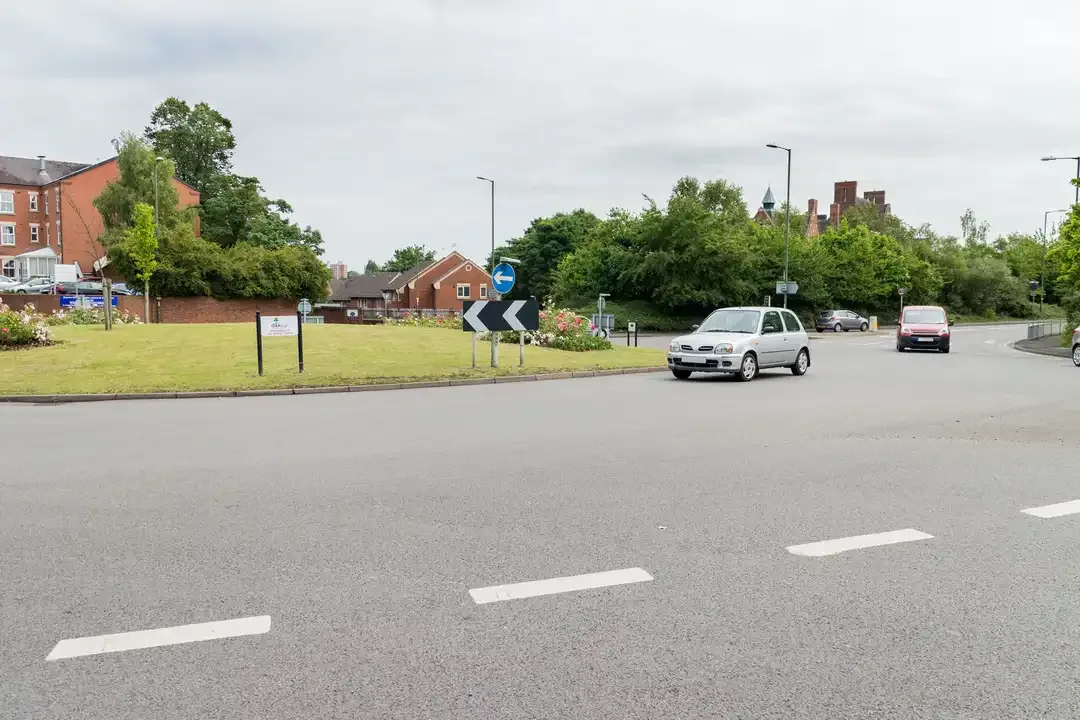
    What does this line across the road at the entrance to a roundabout mean?

    Illustration for the question: What does this line across the road at the entrance to a roundabout mean?

    Correct answer: A — Give way to traffic from the right

    Slow down as you approach the roundabout and check for traffic from the right. If you need to stop and give way, stay behind the broken line until it's safe to emerge onto the roundabout.

  10. Question 10 of 20

    Hazard awareness

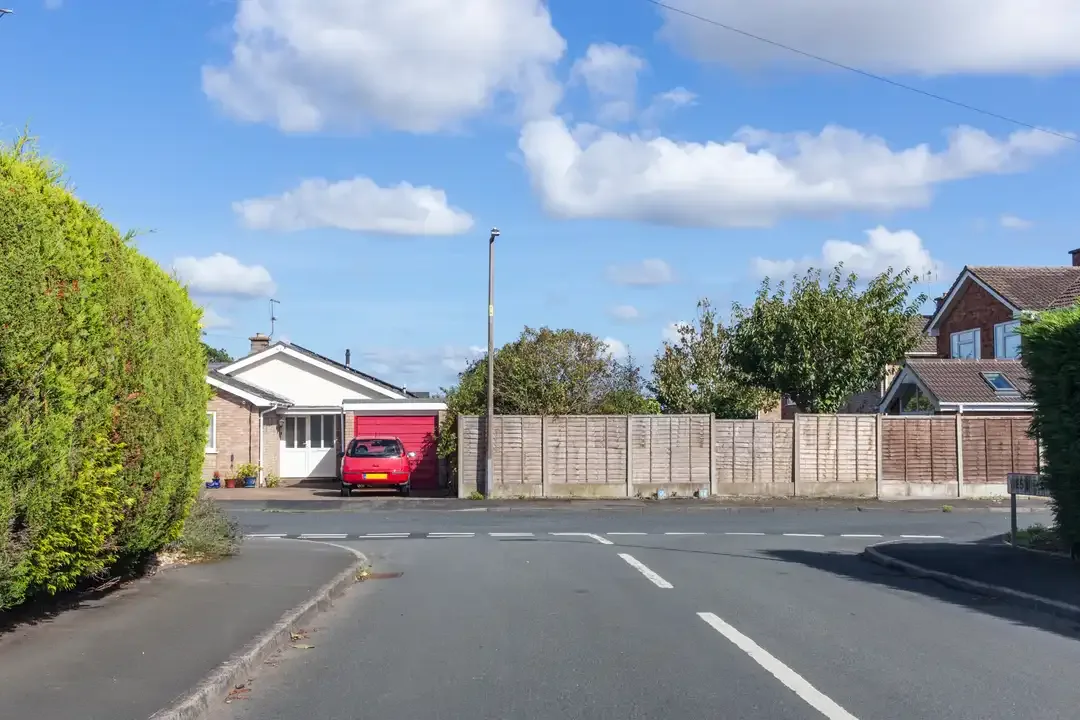
    Why must you take great care when emerging from this junction?

    Illustration for the question: Why must you take great care when emerging from this junction?

    Correct answer: D — The view is restricted

    You may have to pull forward slowly until you can see up and down the road. Be aware that the traffic approaching the junction cannot see you either. If you do not know that it’s clear, do not go.

  11. Question 11 of 20

    Road and traffic signs

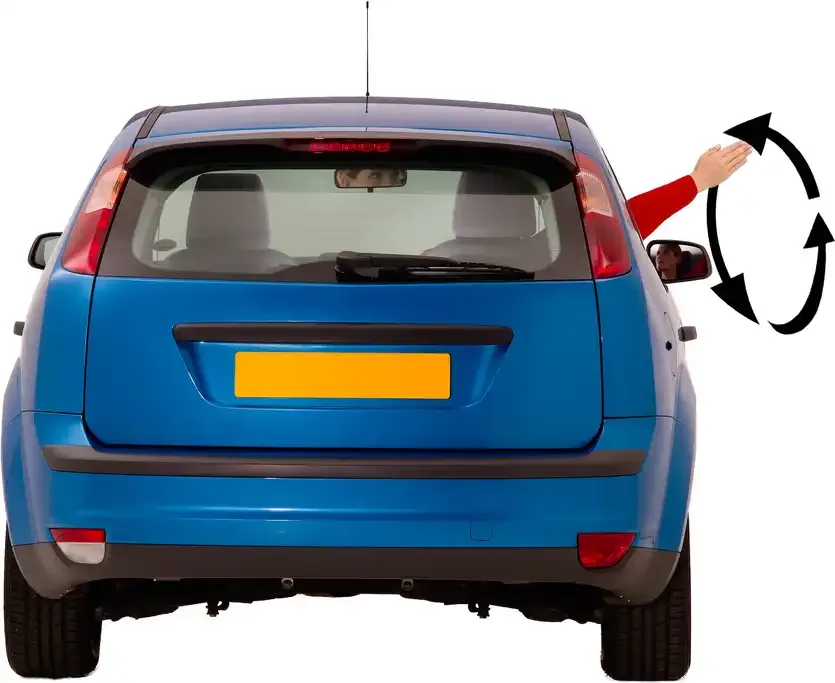
    What does this arm signal mean?

    Illustration for the question: What does this arm signal mean?

    Correct answer: D — The driver intends to turn left

    There might be an occasion where another driver uses an arm signal. This may be because the vehicle’s indicators are obscured by other traffic. In order for such signals to be effective, all drivers should know their meaning. Be aware that the ‘left turn’ signal might look similar to the ‘slowing down’ signal.

  12. Question 12 of 20

    Hazard awareness

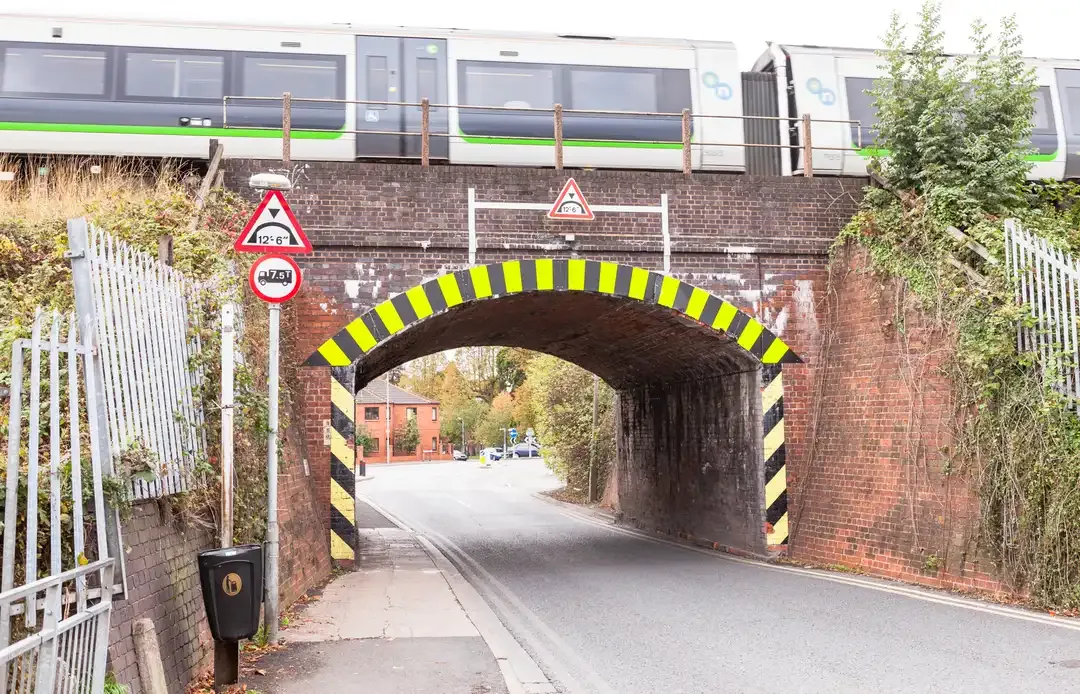
    Which type of vehicle should you be ready to give way to as you approach this bridge?

    Illustration for the question: Which type of vehicle should you be ready to give way to as you approach this bridge?

    Correct answer: B — Buses

    A bus or high-sided lorry will have to take a position in the centre of the road to clear the bridge. There's normally a sign to show this. Look well ahead, past the bridge and be ready to stop and give way to large oncoming vehicles.

  13. Question 13 of 20

    Road and traffic signs

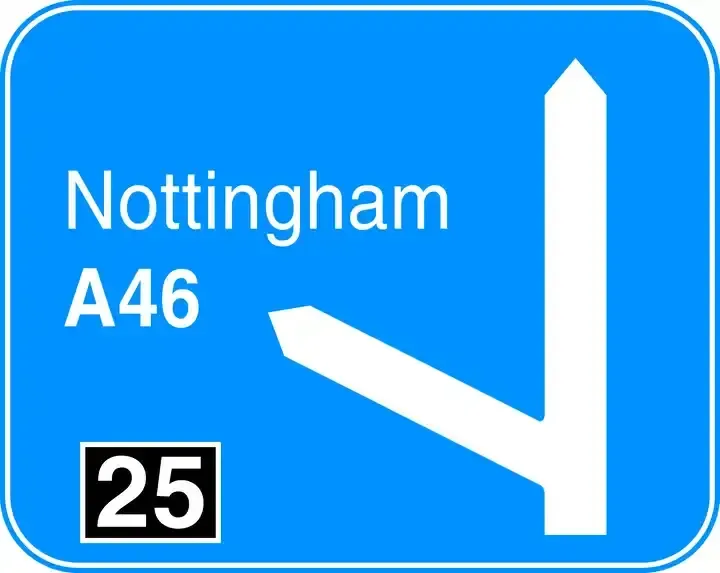
    What does '25' mean on this motorway sign?

    Illustration for the question: What does '25' mean on this motorway sign?

    Correct answer: C — The number of the next junction

    Before you set out on your journey, use a road map to plan your route. When you see an advance warning of your junction, make sure you get into the correct lane in plenty of time. Last-minute harsh braking and cutting across lanes at speed is extremely hazardous.

  14. Question 14 of 20

    Hazard awareness

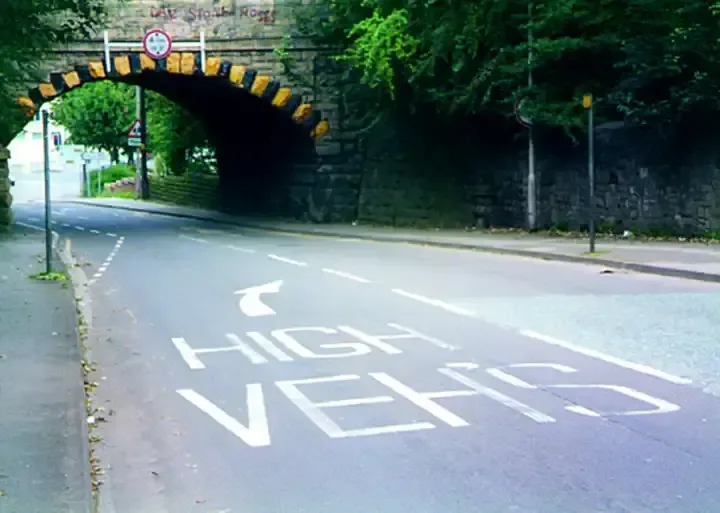
    What should you do as you approach this overhead bridge?

    Illustration for the question: What should you do as you approach this overhead bridge?

    Correct answer: C — Be prepared to give way to large vehicles in the middle of the road

    Oncoming large vehicles may need to move to the middle of the road to pass safely under the bridge. There will not be enough room for you to continue, so you should be ready to stop and wait.

  15. Question 15 of 20

    Road and traffic signs

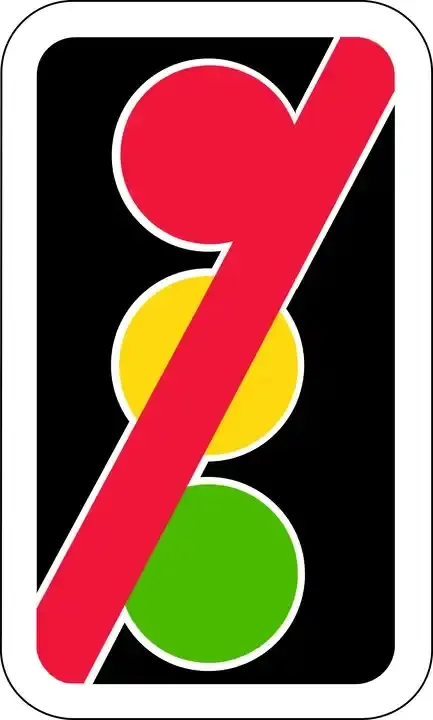
    What should you do when you see this sign at a crossroads?

    Illustration for the question: What should you do when you see this sign at a crossroads?

    Correct answer: B — Carry on with great care

    When traffic lights are out of order, treat the junction as an unmarked crossroads. Be very careful and be prepared to stop; no-one has priority.

  16. Question 16 of 20

    Hazard awareness

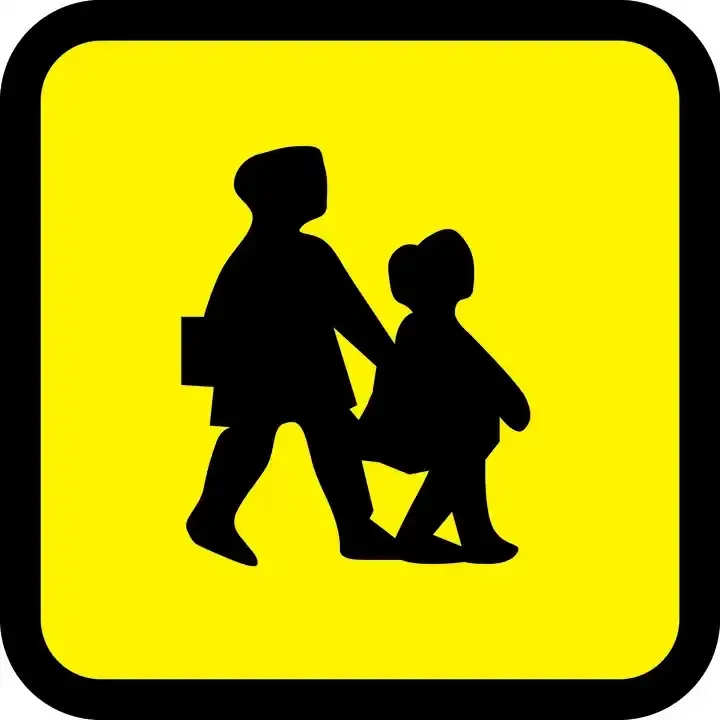
    What type of vehicle displays this yellow sign?

    Illustration for the question: What type of vehicle displays this yellow sign?

    Correct answer: B — A school bus

    Buses which carry children to and from school may stop at places other than scheduled bus stops. Be aware that they might pull over at any time to allow children to get on or off. This will normally be when traffic is heavy during rush hour.

  17. Question 17 of 20

    Road and traffic signs

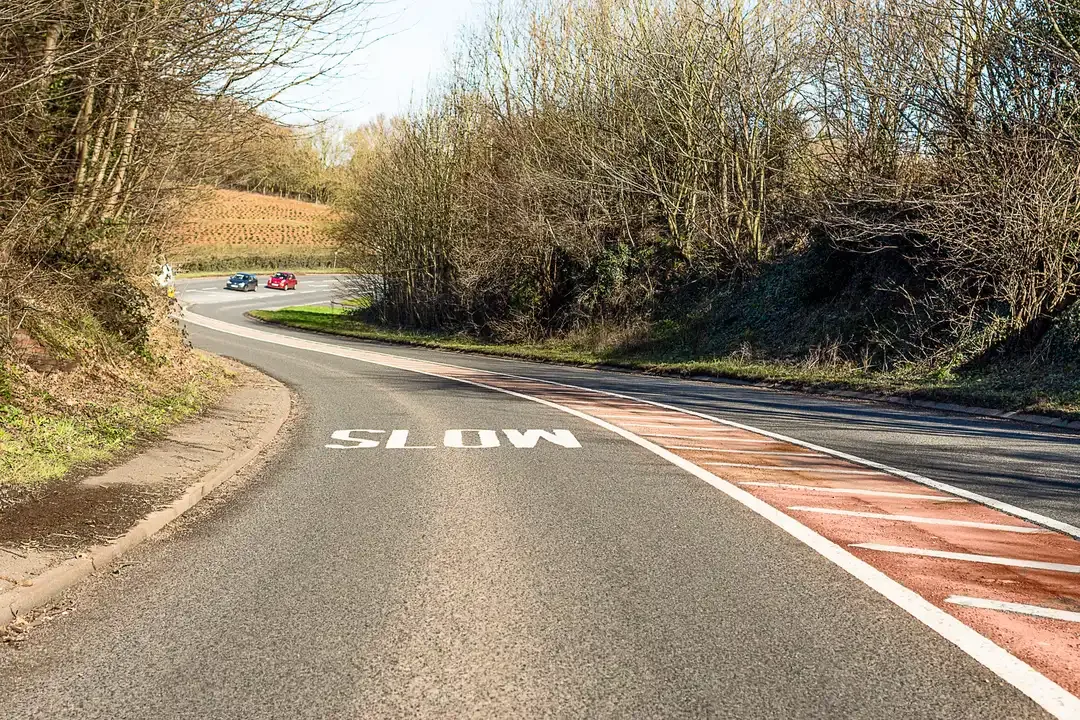
    What's the reason for the hatched area along the centre of this road?

    Illustration for the question: What's the reason for the hatched area along the centre of this road?

    Correct answer: A — It separates traffic flowing in opposite directions

    Areas of 'hatched markings' such as these separate traffic streams that could be a danger to each other. They're often seen on bends or where the road becomes narrow. If the area is bordered by a solid white line, you must not enter it except in an emergency.

  18. Question 18 of 20

    Hazard awareness

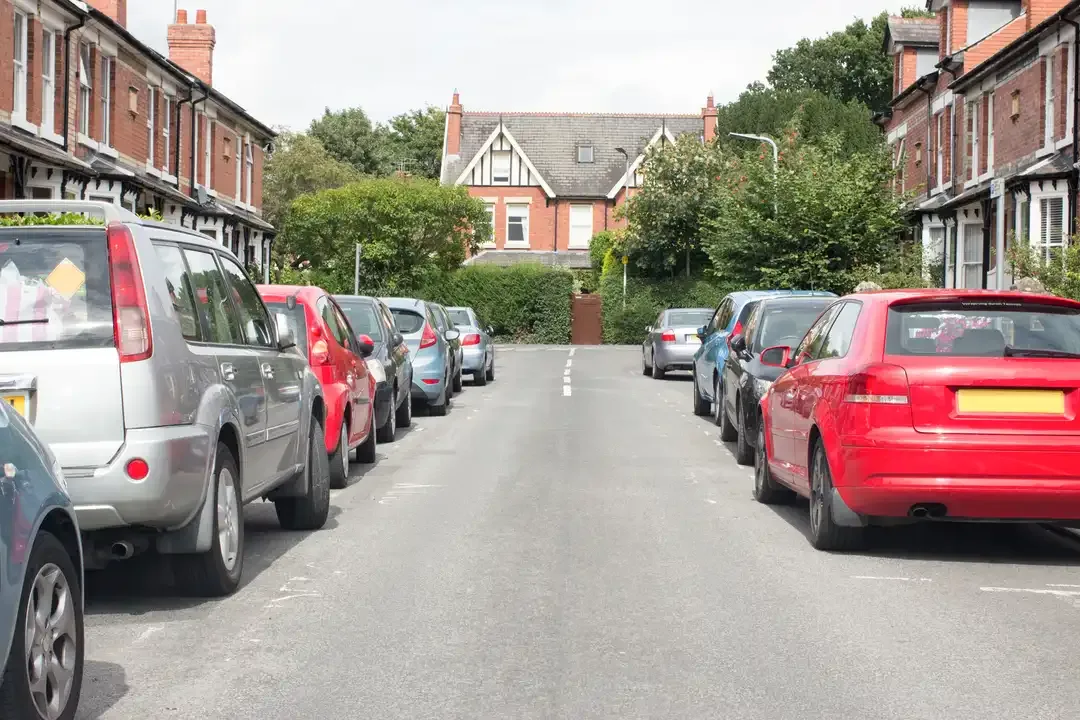
    What hazard should you be aware of when travelling along this street?

    Illustration for the question: What hazard should you be aware of when travelling along this street?

    Correct answer: C — Children running out between vehicles

    On roads where there are many parked vehicles, you might not be able to see children between parked cars and they may run out into the road without looking.

  19. Question 19 of 20

    Road and traffic signs

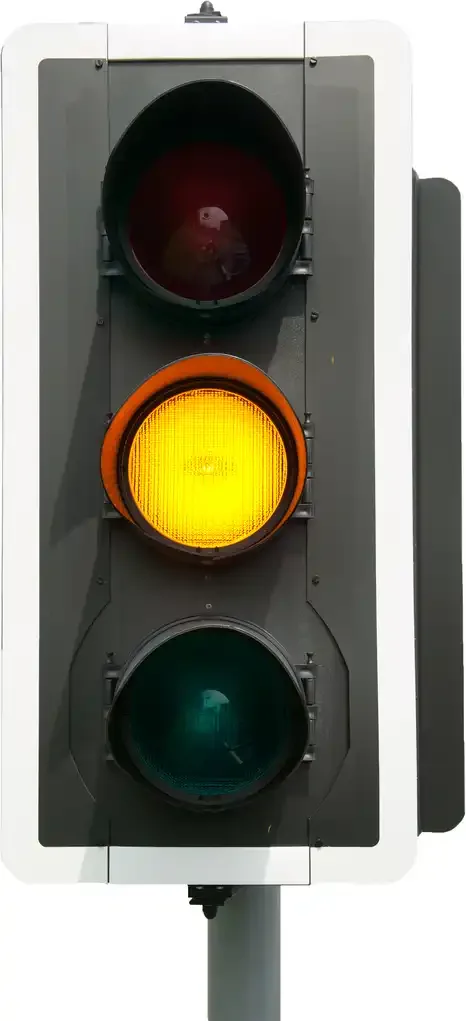
    You see this amber traffic light ahead. Which light, or lights, will come on next?

    Illustration for the question: You see this amber traffic light ahead. Which light, or lights, will come on next?

    Correct answer: A — Red alone

    At junctions controlled by traffic lights, you must stop behind the white line until the lights change to green. A red light, an amber light, and red and amber lights showing together all mean stop.

    You may proceed when the light is green unless your exit road is blocked or pedestrians are crossing in front of you.

    If you’re approaching traffic lights that are visible from a distance and the light has been green for some time, be ready to slow down and stop, because the lights are likely to change.

  20. Question 20 of 20

    Hazard awareness

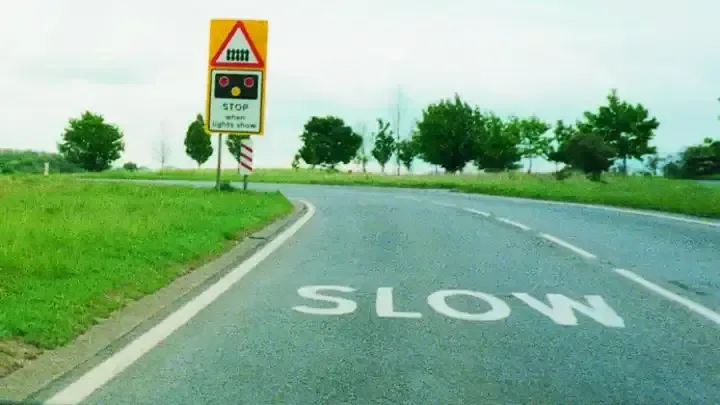
    Why should you slow down as you approach this hazard?

    Illustration for the question: Why should you slow down as you approach this hazard?

    Correct answer: A — Because of the level crossing

    You should be slowing down and selecting the correct gear in case you have to stop at the level crossing. Look for the signals and be prepared to stop if necessary.