
Topic
Hazard awareness
Last reviewed against gov.uk on
Hazard awareness covers anticipation — reading the road before something becomes urgent. It links directly to the hazard perception test: the same skill of spotting a developing situation early is what scores points there and keeps you safe on the road.
What’s tested
- The difference between static, potential and developing hazards
- Effects of alcohol, recreational drugs and some prescription medicines
- Planning rest stops on long journeys (every two hours, minimum 15 min)
- Approaching crossings, junctions and traffic lights with care
- Reading clues from other road users — brake lights, gaze, indicators
Key Highway Code rules
Try a real DVSA revision question
Practice question
From the DVSA revision question bank
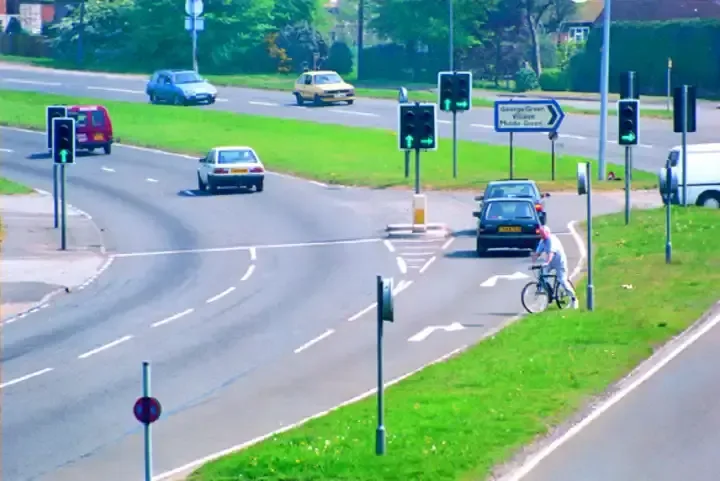
What's the main hazard shown in this picture?
Show explanation
The correct answer is C.
Look at the picture carefully and try to imagine you're there. The cyclist in this picture appears to be trying to cross the road. You must be able to deal with the unexpected, especially when you're approaching a hazardous junction. Look well ahead to give yourself time to deal with any hazards.
Want more practice? Get free DVSA revision questions, hazard perception clips and the latest Highway Code in our app.


Practise 20 real DVSA car revision questions on this topic and one more →
Common mistakes
- Driving the morning after a heavy night and assuming you are sober
- Treating failed traffic lights as one-way priority instead of unmarked junction
- Underestimating very young or very old pedestrians
- Filtering past a queue when you cannot see the head of the queue
Keep going
All 14 topics
- Alertness Staying focused: mirrors, observation, scanning the road, avoiding fatigue and distraction.
- Attitude Considerate driving: patience, following distance, behaviour at crossings and roundabouts.
- Safety and your vehicle Roadworthiness: brakes, tyres, lights, fluids, warning lights and securing the car.
- Safety margins Stopping distances, weather, road surface, and the space you need to react safely.
- Vulnerable road users Pedestrians, cyclists, motorcyclists, horse riders, children, older and disabled people.
- Other types of vehicle Sharing the road with lorries, buses, motorcycles, trams and emergency vehicles.
- Vehicle handling Driving in rain, fog, snow, dark and strong wind — how conditions change the car.
- Motorway rules Joining, lane discipline, speed, breakdowns and smart-motorway running lanes.
- Rules of the road Speed limits, junctions, roundabouts, parking, level crossings and one-way streets.
- Road and traffic signs The visual language of UK roads — shape, colour and meaning of every sign and signal.
- Documents Licence, insurance, MOT, V5C log book and SORN — the paperwork to be legally on the road.
- Incidents, accidents and emergencies First aid, CPR, AED, RTC procedure, breakdowns and tunnel safety.
- Vehicle loading Carrying passengers, luggage, roof loads and towing — and how each changes the car.