
Topic
Road and traffic signs
Last reviewed against gov.uk on
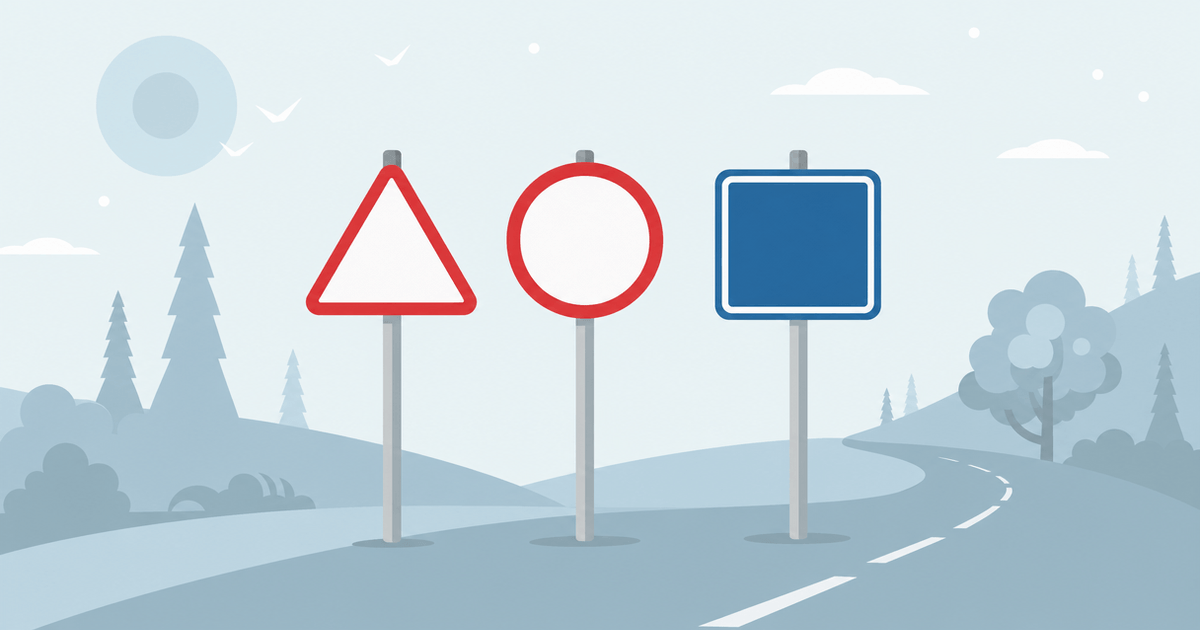
Road and traffic signs covers the visual language of UK roads — how the shape and colour of a sign tell you its purpose at a glance, what the traffic light sequences mean, and how lane markings and arrows guide traffic.
What’s tested
- Sign shapes: circles order, triangles warn, rectangles inform
- Sign colours: red prohibits, blue mandates or motorway-information, green primary routes, brown tourist
- Traffic light sequences and what amber-only means
- Lane markings — solid white, broken white, hatched chevrons
- Variable message signs and matrix signals
Key Highway Code rules
Try a real DVSA revision question
Practice question
From the DVSA revision question bank
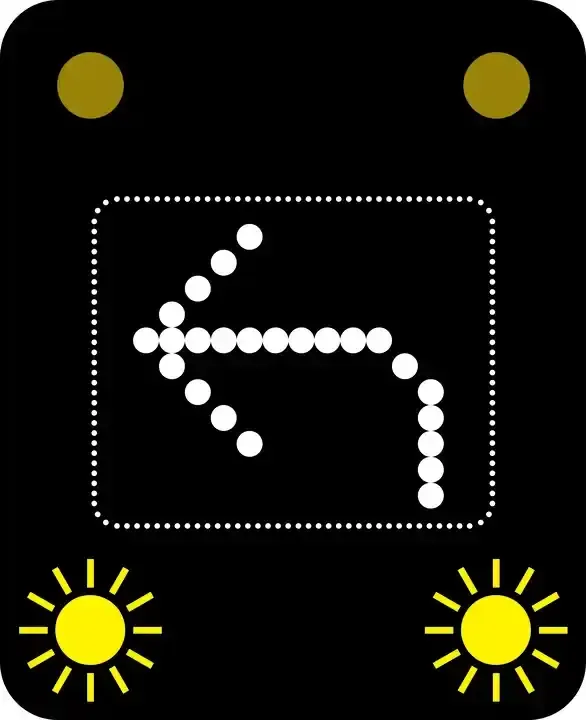
What should you do when you see this sign as you travel along a motorway?
Show explanation
The correct answer is A.
You'll see this sign if the motorway is closed ahead. Pull into the left-hand lane as soon as it's safe to do so. Do not wait until the last moment before you move across, because the lane may be busy and you'll have to rely on another driver making room for you.
Want more practice? Get free DVSA revision questions, hazard perception clips and the latest Highway Code in our app.


Practise 20 real DVSA car revision questions on this topic and one more →
Common mistakes
- Confusing the four pedestrian crossing types (zebra, pelican, puffin, toucan)
- Reading a “no entry” sign as a one-way arrow
- Crossing a solid white line where no exception applies
- Misreading a warning triangle as a regulatory order
Keep going
All 14 topics
- Alertness Staying focused: mirrors, observation, scanning the road, avoiding fatigue and distraction.
- Attitude Considerate driving: patience, following distance, behaviour at crossings and roundabouts.
- Safety and your vehicle Roadworthiness: brakes, tyres, lights, fluids, warning lights and securing the car.
- Safety margins Stopping distances, weather, road surface, and the space you need to react safely.
- Hazard awareness Anticipating risk: spotting clues, planning ahead, reading other road users’ behaviour.
- Vulnerable road users Pedestrians, cyclists, motorcyclists, horse riders, children, older and disabled people.
- Other types of vehicle Sharing the road with lorries, buses, motorcycles, trams and emergency vehicles.
- Vehicle handling Driving in rain, fog, snow, dark and strong wind — how conditions change the car.
- Motorway rules Joining, lane discipline, speed, breakdowns and smart-motorway running lanes.
- Rules of the road Speed limits, junctions, roundabouts, parking, level crossings and one-way streets.
- Documents Licence, insurance, MOT, V5C log book and SORN — the paperwork to be legally on the road.
- Incidents, accidents and emergencies First aid, CPR, AED, RTC procedure, breakdowns and tunnel safety.
- Vehicle loading Carrying passengers, luggage, roof loads and towing — and how each changes the car.